Home What Are Full and Partial Dentures? A Corsicana, TX Patient Guide
Tooth loss rarely follows a neat pattern.
One person may be missing several back teeth but still have healthy front teeth. Another may have scattered gaps on both sides of the mouth.
Someone else may reach a point where the few remaining teeth are no longer strong enough to support comfortable chewing.
Yet all three patients may begin their search with the same word: Dentures.
That is where the confusion often starts.
Many people picture dentures as a complete set of removable teeth. They assume the treatment becomes relevant only after all natural teeth are gone. In reality, dentures can be designed for very different levels of tooth loss.
Therefore, this blog takes a closer look at dentures and understands the difference between complete and partial dentures.
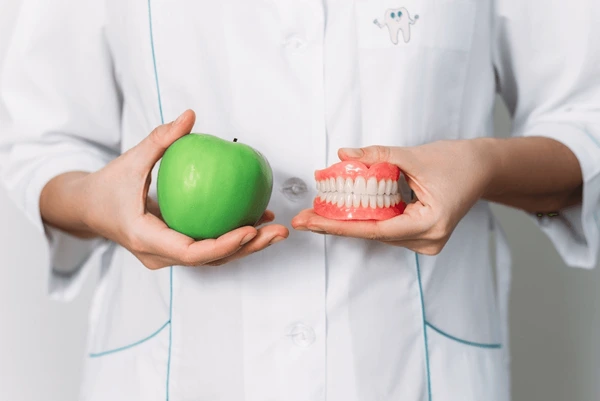
A full denture is designed for an upper or lower arch where all natural teeth are missing or where the remaining teeth cannot be predictably maintained.
Full dentures are commonly considered when:
A partial denture has a different job. It must replace missing teeth while fitting into a mouth where natural teeth are still present.
Partial dentures in Corsicana, TX, are commonly used when:
The purpose is not to unnecessarily replace healthy teeth. It is to restore the missing areas while working with the remaining natural teeth.
The process begins with a check-up of the teeth, gums, bite, and supporting tissues. If natural teeth are present, the dentist will evaluate their condition to determine whether they can be maintained and how they will affect the treatment plan.
Whether a full denture, partial denture, or another tooth replacement option will best fit the patient’s needs will be determined by the dentist. This decision may be influenced by oral health, pattern of tooth loss, lifestyle, expectations, and long-term goals.
Impressions or digital scans are taken to help create a denture that fits the individual’s mouth. Further measurements may be needed to assess the relationship and bite between the upper and lower jaws.
The denture is designed with both function and appearance in mind. Tooth size, shape, position, and shade are among the factors that may be considered to achieve a result appropriate for the patient’s facial features and smile.
The dentist tries the denture in to test the fit, the bite, and the general comfort. Adjustments may be necessary, especially as the patient becomes accustomed to wearing and using the new appliance.
| Who Qualifies? | Dentures (complete or partial) are a great option for patients missing multiple teeth due to injury, gum disease, or dental decay. |
| Process Overview | Step 1
The denture procedure starts with an initial consultation with your dentist. Step 2 Once the professional has examined your smile, it’s time to place and fix the denture. Step 3 Following the placement, your dentist will suggest tips and aftercare to ensure the appliance lasts longer. |
| Timeline | Undergoing denture treatment can take anywhere from a few weeks to months. |
| Aftercare | Follow your dentist’s guide on using dentures and proper recovery. |
| Location & Contact | Navarro Dental Center
1661 W 2nd Ave, Corsicana, TX 75110, United States |
Replace Missing Teeth Without Treating All Patients Alike
Dentures offer flexibility – someone who has lost all the teeth in one arch has different needs than someone who has three or four spaces. Full and partial dentures in Corsicana, TX, provide treatment tailored to the extent and distribution of tooth loss, rather than a one-size-fits-all approach.
Simplify Daily Eating
Missing teeth can make certain foods difficult to chew and may cause patients to rely on one area of the mouth. Dentures are used to replace lost chewing surfaces. There is often a period of adjustment, but many patients are grateful to be able to approach meals with more function and fewer gaps affecting their eating.
Enhance the Look of the Smile
Losing teeth can affect a person’s feelings about smiling, talking, or being photographed. Dentures are constructed to match the patient’s appearance, filling in the visible gaps with teeth. The goal is not to make everyone smile the same way, but to find a result that fits each person.
Keep Teeth Healthy
A partial denture replaces missing teeth, but you don’t have to have your healthy natural teeth removed for it. If the other teeth are good candidates for staying in the mouth, the treatment can be planned to work around them. Within the broader oral health plan, the preservation of useful natural tooth structure can be maintained, underscoring the importance of careful evaluation.
Help Make Everyday Communications More Clear
Some sounds are made with the help of teeth. Depending on where and how many teeth are missing, speech may feel different. It can fill gaps where teeth are missing and provide support to areas with missing teeth. Patients usually need to practice a bit before their tongue and mouth get used to a new denture.
Provide a Working Substitute for the Replacement of Teeth
Removable dentures near Corsicana are a practical solution for some patients with extensive or scattered tooth loss. They can be removed for cleaning and are available in various designs to meet clinical needs. You do not just pick the easiest option, but the one that is best for your mouth, your expectations, and your dentist’s judgment.
Patients considering dentures often present to the best dentures dentist in Corsicana from very different starting points.
Some have lost teeth recently. Some have lived with the gaps for years. A few may already have an older denture that is less comfortable or less stable than it used to be.
That is why denture care should start with an evaluation, not an assumption.
Navarro Dental Center will examine your remaining teeth, gums, bite, and pattern of tooth loss before discussing the best denture options. Someone who still has healthy teeth may have different possibilities than someone in need of a complete arch replacement.
However, if you are looking for Navarro Dental Center dentures, or the best dentures dentist in Corsicana for your needs, the useful question is not, “Do you offer dentures?”
Full dentures replace all of the upper or lower arch of teeth, and partial dentures are designed to replace selected missing teeth. What’s right for you depends on how many teeth you’re missing, where they are, the health of your remaining teeth, your bite, and your overall treatment goals.
Replacement varies, but many dentures will last about five to ten years. Normal wear and tear and changes in the mouth over time can affect the fit. Regular dental visits monitor the denture, supporting tissues, bite, and the need for adjustments or replacement.
Denture costs will depend on whether you need a full or partial appliance, the materials chosen, the complexity of the treatment, and any preparation required. A dental evaluation gives a more accurate estimate because no two patterns of tooth loss are exactly alike.
Most patients will need to adjust to eating with new dentures. During the transition, softer foods, smaller bites, and careful chewing can be helpful.
Partial dentures may be needed if healthy natural teeth remain in the areas next to the missing teeth. Full dentures may be an option when an entire arch of teeth is missing or when remaining teeth cannot be predictably maintained. Only a dental exam can determine the best option.
Choosing between full and partial dentures is not simply a matter of counting how many teeth are missing.
A patient with several strong natural teeth may have very different treatment possibilities from someone whose remaining teeth are extensively damaged.
Even when two people have lost the same number of teeth, the pattern of those gaps can lead to completely different denture designs.
That is why personalized planning is central to successful treatment. Explore your options with our dentists at Navarro Dental Center today!